10 Must-Read Books for Sustainability Leaders: From Strategy to Digital Execution
Sustainability leadership is changing.
For years, the role of the Chief Sustainability Officer was largely focused on setting ambitions, coordinating initiatives, and communicating progress. Today, the expectations are much higher. Sustainability leaders are increasingly responsible for translating corporate commitments into measurable action across finance, operations, procurement, IT, and the wider value chain.
At the same time, the data behind those commitments is becoming more complex. Regulatory requirements are evolving, stakeholders expect greater transparency, and sustainability teams are being asked to produce more reliable information with limited resources.
The result is a new leadership challenge: How do you turn sustainability ambition into something the organization can actually execute?
That requires more than climate expertise. It requires strategic thinking, business leadership, data literacy, operational discipline, and an understanding of how technology can scale sustainability across the enterprise.
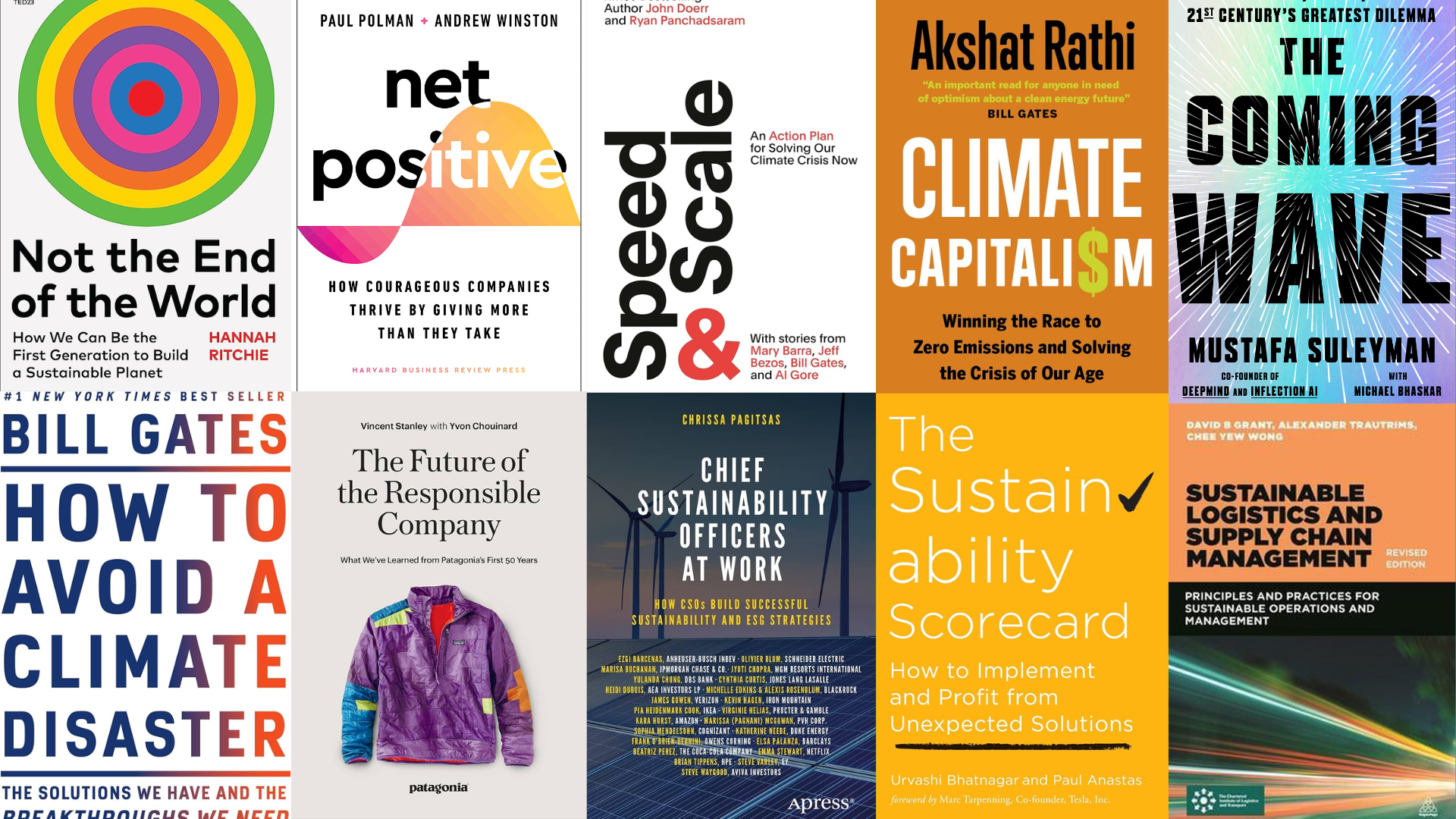
To help navigate that challenge, we have curated 10 essential non-fiction books for today's sustainability leaders. The list brings together perspectives on business transformation, climate action, technology, governance, measurement, and value chains, including several books highlighted across the sustainability industry.
Pillar 1: Strategy, Leadership & Business Transformation
The first step is understanding how sustainability can move from a corporate ambition to a business priority.
1. Not the End of the World: How We Can Be the First Generation to Build a Sustainable Planet

Hannah Ritchie, 2024
Climate conversations can easily become dominated by either optimism or doom. Ritchie's approach is different. Drawing on extensive data from Our World in Data, she examines the progress we have already made while identifying where much more action is needed.
Why it matters for sustainability leaders:
This is a valuable foundation for leaders who need to communicate sustainability through evidence rather than emotion. It provides a data-driven perspective for setting realistic priorities, challenging assumptions, and communicating progress to executives and stakeholders.
Best for: Data-driven sustainability strategy.
2. Net Positive: How Courageous Companies Thrive by Giving More Than They Take

Paul Polman and Andrew Winston, 2021
What if companies measured their success not only by the value they created for shareholders, but also by the value they created for society and the planet?
Polman and Winston make the case for companies to become a net positive force, moving beyond risk reduction toward a business model that actively contributes to solving global challenges.
Why it matters for sustainability leaders:
The book is particularly relevant for leaders trying to move sustainability out of a specialist function and into the core business strategy. It challenges organizations to rethink value creation, supply chains, stakeholder relationships, and long-term competitiveness.
Best for: Embedding sustainability into corporate strategy.
3. Speed & Scale: An Action Plan for Solving Our Climate Crisis Now

John Doerr, 2021
Sustainability strategies often fail not because the ambition is missing, but because execution is unclear.
John Doerr applies the principles of Objectives and Key Results, or OKRs, to the climate challenge, translating an enormous global problem into measurable objectives, key results, and accountable action.
Why it matters for sustainability leaders:
It offers a useful framework for turning ambitious climate targets into operational plans. For organizations struggling to connect net-zero commitments with initiatives, KPIs, budgets, and accountability, this is an especially practical read.
Best for: Turning sustainability targets into execution.
4. Climate Capitalism: Winning the Global Race to Zero Emissions
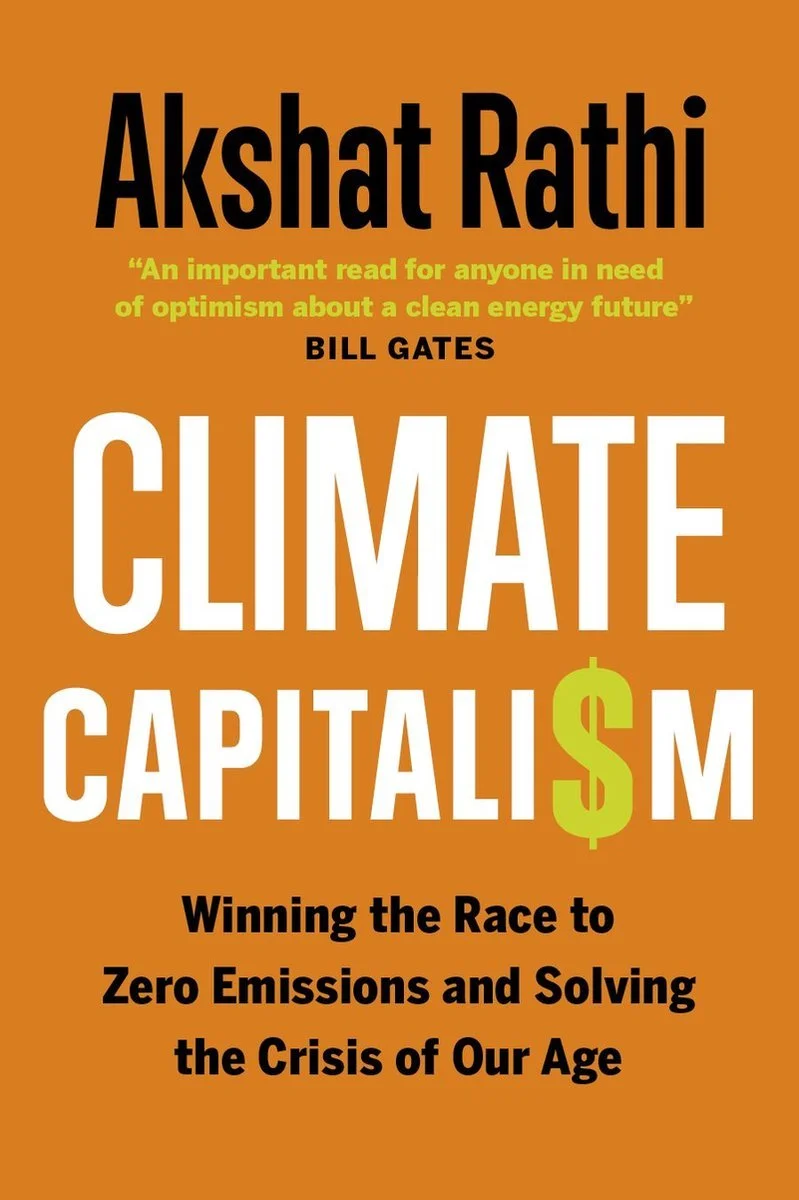
Akshat Rathi, 2024
The transition to a low-carbon economy is not simply an environmental story. It is also a story about technology, investment, policy, innovation, and competitive advantage.
Rathi explores how businesses and governments are driving the transition and how the economics of clean technologies are changing.
Why it matters for sustainability leaders:
It helps reframe sustainability from a compliance exercise or cost center into a source of innovation and competitive advantage. That perspective is increasingly important when sustainability leaders need to secure investment and executive sponsorship.
Best for: Connecting climate action with business opportunity.
Pillar 2: Climate Science, Decarbonization & Technology
Strategy needs to be grounded in an understanding of both the climate challenge and the technologies that can help organizations respond.
5. The Coming Wave: Technology, Power, and the Twenty-first Century's Greatest Dilemma
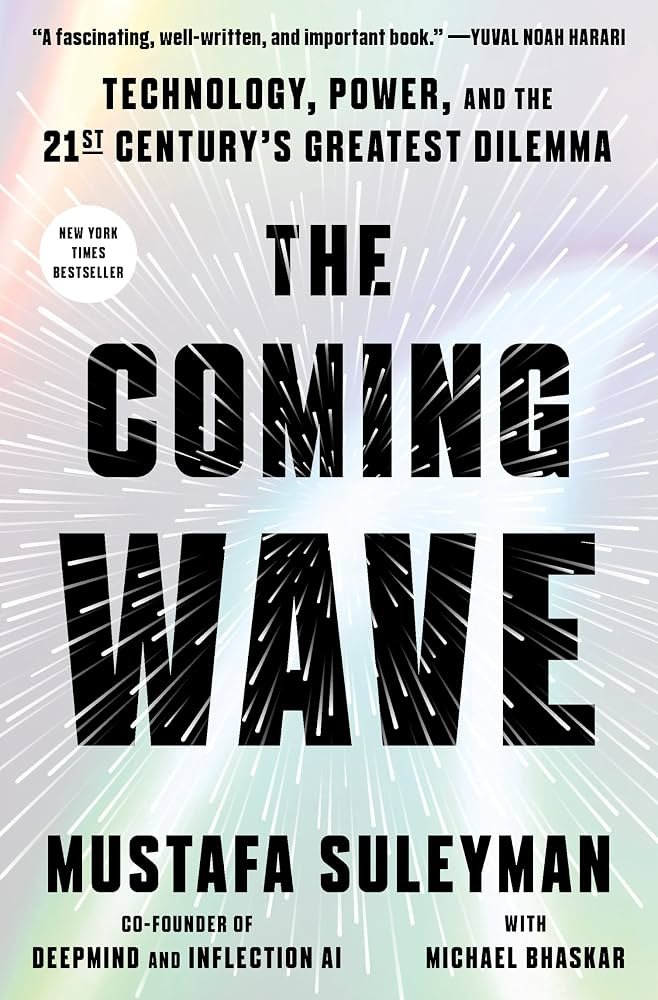
Mustafa Suleyman and Michael Bhaskar, 2023
AI, synthetic biology, and other rapidly advancing technologies are reshaping how businesses operate. But they also introduce new risks, including questions around governance, resource consumption, and control.
Why it matters for sustainability leaders:
Sustainability and technology are becoming increasingly intertwined. AI can help automate data collection, identify inefficiencies, optimize energy systems, and accelerate analysis. At the same time, organizations need to understand the environmental footprint and governance implications of these technologies.
For sustainability leaders working more closely with CIOs and digital teams, this book provides valuable context.
Best for: Understanding the intersection of technology, sustainability, and governance.
6. How to Avoid a Climate Disaster: The Solutions We Have and the Breakthroughs We Need
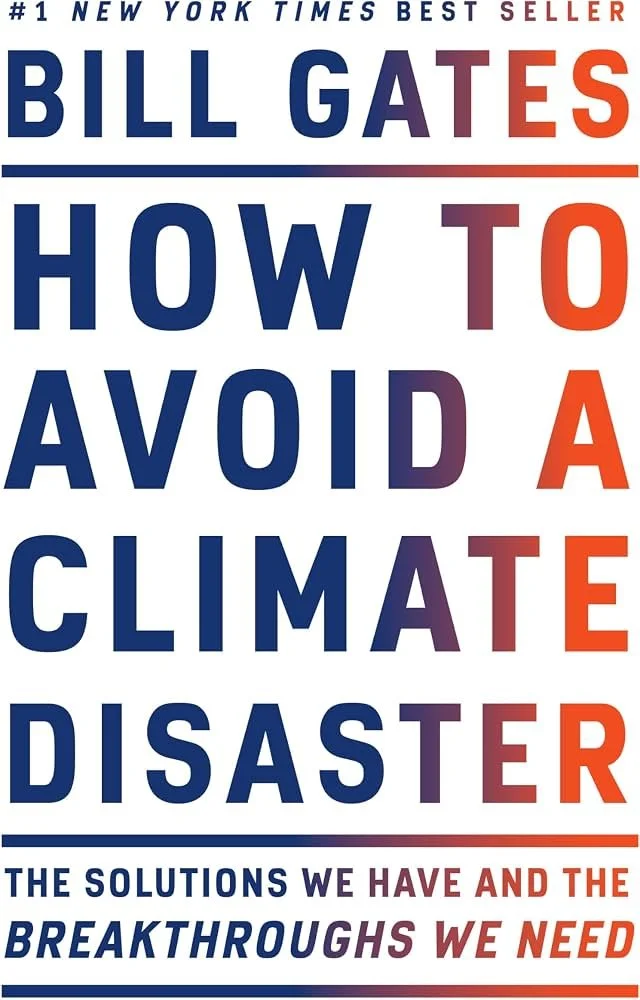
Bill Gates, 2021
Gates approaches climate change from a technological and economic perspective, examining the sectors responsible for emissions and the innovations needed to decarbonize them.
One of the book's most useful concepts is the "Green Premium", the additional cost of choosing a low-carbon alternative over an incumbent technology.
Why it matters for sustainability leaders:
Decarbonization requires capital allocation and difficult trade-offs. Understanding where clean alternatives are commercially viable today, and where innovation is still needed, can help leaders build more realistic transition plans.
Best for: Understanding the economics of decarbonization.
Pillar 3: Governance, Data & Value Chains
The sustainability strategy is only as credible as the data, processes, and people behind it.
7. The Responsible Company: What We've Learned From Patagonia's First 50 Years
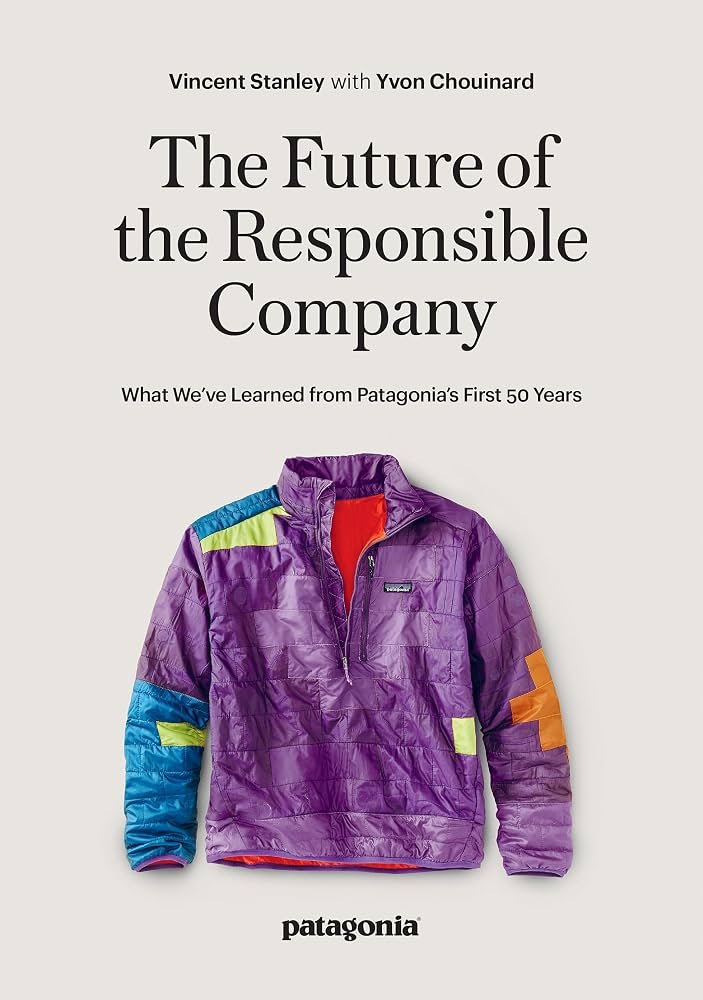
Yvon Chouinard and Vincent Stanley, 2023
Patagonia has become one of the world's most recognized examples of purpose-driven business. This book explores the company's approach to product design, supply chains, environmental responsibility, and corporate culture.
Why it matters for sustainability leaders:
The lessons extend far beyond apparel. It demonstrates how sustainability can influence product decisions, procurement, operations, and company culture rather than sitting within a separate sustainability function.
Best for: Building sustainability into everyday business decisions.
8. Chief Sustainability Officers at Work: How CSOs Lead Change Around the World

Chrissa Pagitsas, 2022
Few books offer a closer look at the realities of the CSO role. Through conversations and case studies with sustainability leaders, Pagitsas explores how executives are navigating organizational change, stakeholder expectations, governance, and business transformation.
Why it matters for sustainability leaders:
The role of the CSO is rarely about sustainability alone. It involves influencing finance, operations, procurement, legal, communications, IT, and the C-suite.
This book offers practical insight into how sustainability leaders build internal alignment and turn sustainability from a function into an organizational capability.
Best for: Leading organizational sustainability transformation.
9. The Sustainability Scorecard: How to Turn Sustainable Performance into Business Advantage

Paul Anastas and Urvashi Bhatnagar, 2022
Sustainability ambitions need measurement. Without consistent KPIs, reliable data, and clear accountability, it becomes difficult to determine whether an organization is actually progressing.
This book focuses on measuring sustainability performance and connecting it with business outcomes.
Why it matters for sustainability leaders:
It is particularly relevant for organizations moving from isolated sustainability initiatives toward standardized performance management. The principles can help leaders think about how sustainability KPIs are defined, collected, monitored, and ultimately used to drive decisions.
Best for: Building measurable sustainability performance.
10. Sustainable Logistics and Supply Chain Management
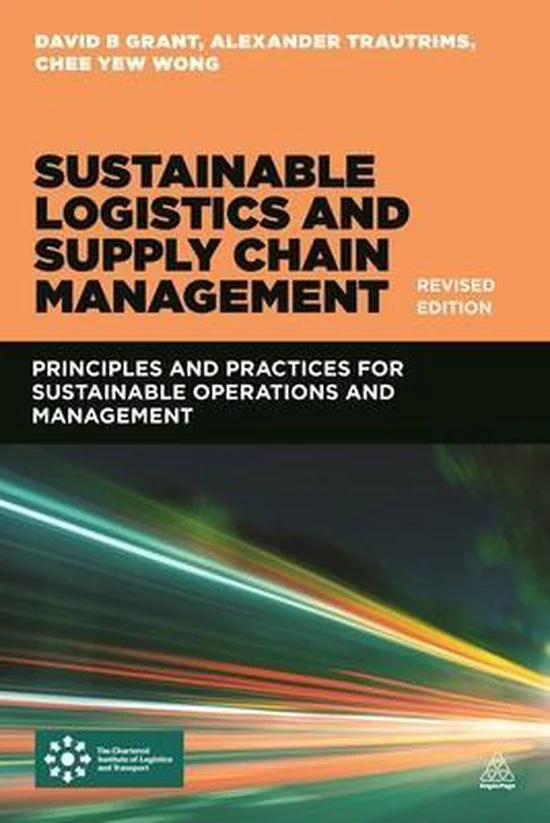
David B. Grant, Alexander Trautrims, and Chee Yew Wong, 2022
For many organizations, the hardest sustainability challenge is not within their own operations. It is across the value chain.
This book explores the environmental dimensions of logistics and supply chain management, covering transportation, distribution, procurement, and broader supply chain strategies.
Why it matters for sustainability leaders:
Scope 3 emissions, supplier engagement, and value-chain data remain some of the most difficult areas of sustainability management. Understanding how sustainability connects with procurement and logistics is increasingly essential for organizations trying to move beyond estimated data toward more granular, primary information.
Best for: Tackling supply chain sustainability and Scope 3.
From Reading to Results
These books offer something more valuable than a collection of sustainability concepts. Together, they highlight a fundamental shift in the role of the sustainability leader.
Sustainability is no longer just about setting the ambition. It is about building the capability to execute it.
A net-zero target is only meaningful when it can be translated into initiatives. Those initiatives require reliable data. Reliable data requires defined processes and ownership. And at enterprise scale, those processes increasingly need digital infrastructure to collect, validate, manage, analyze, and report information efficiently.
This is where many sustainability teams encounter a practical challenge.
Spreadsheets, disconnected systems, manual data collection, and fragmented point solutions may work when sustainability programs are small. They become increasingly difficult to manage as organizations expand across countries, business units, facilities, suppliers, and reporting frameworks.
The next generation of sustainability leadership will therefore require both strategic vision and digital execution.
The leaders who can connect the two will be better positioned to move from reporting sustainability performance to actually improving it.
The books provide the ideas. The next challenge is building the systems that turn those ideas into action.
Discover Sustaira Sustainability Guides