
Three Sustainability Priorities Emerging in Construction: Key Takeaways from the Contractor’s Commitment Round Table & CA Green Building Conference
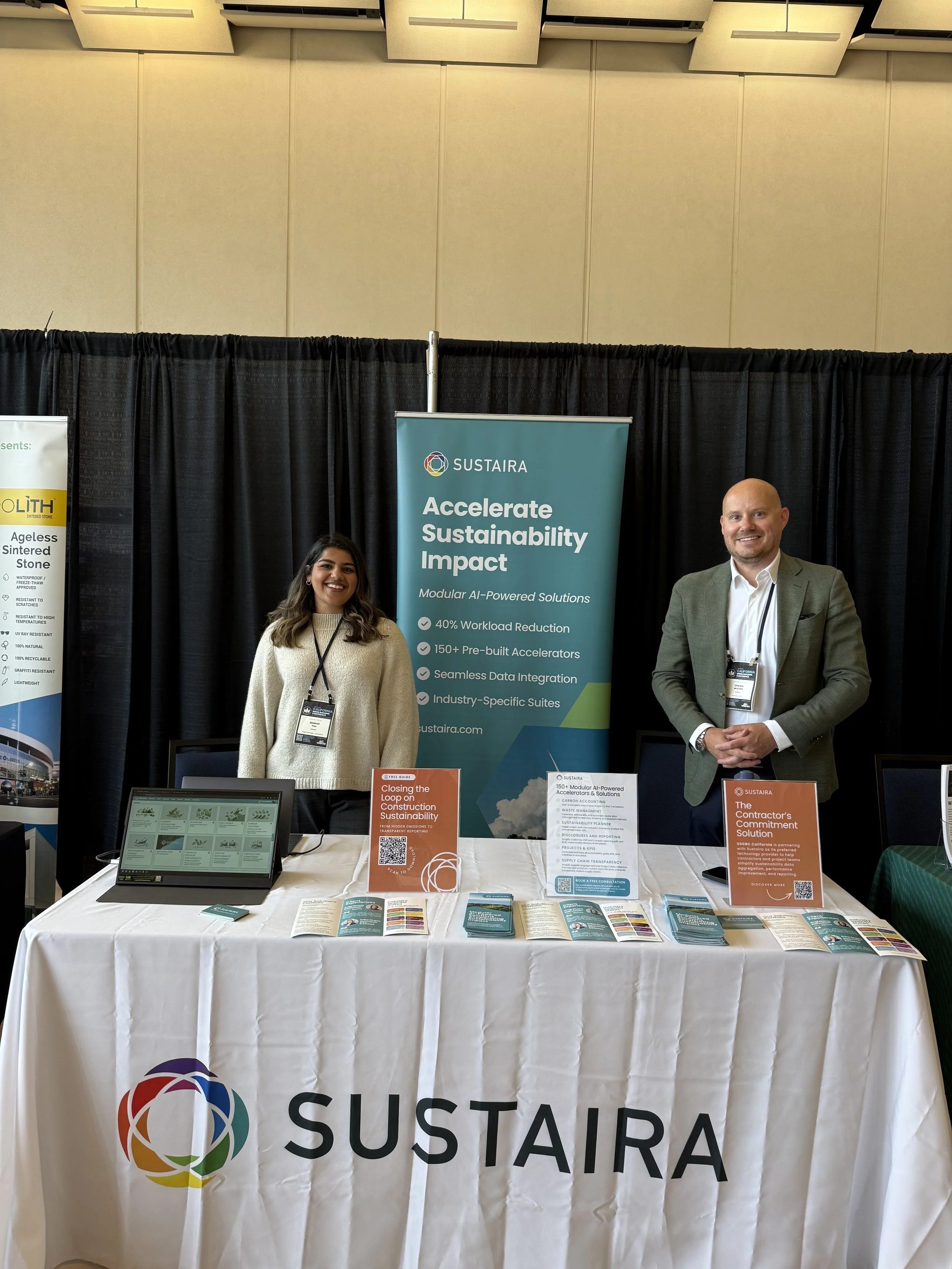
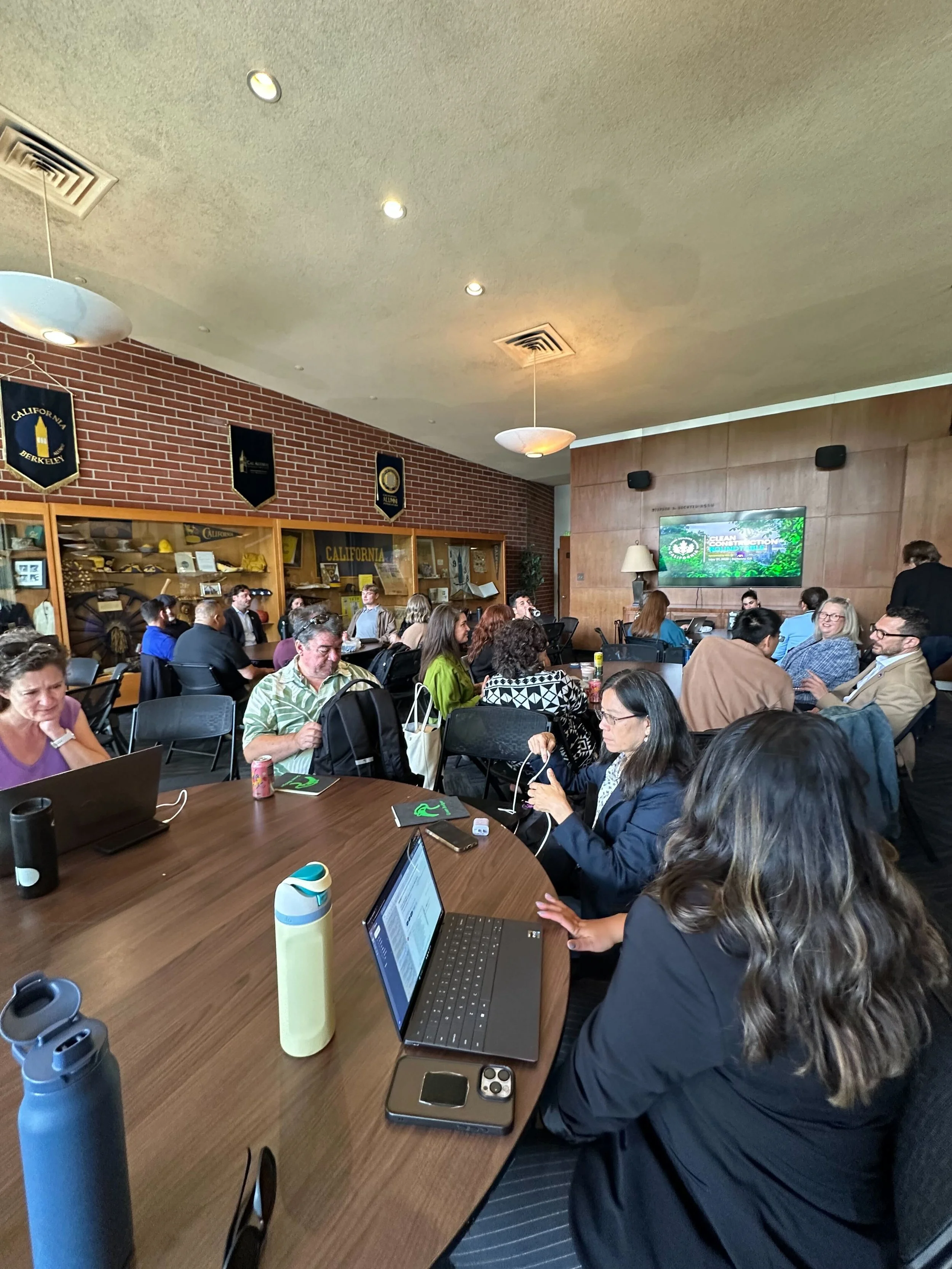
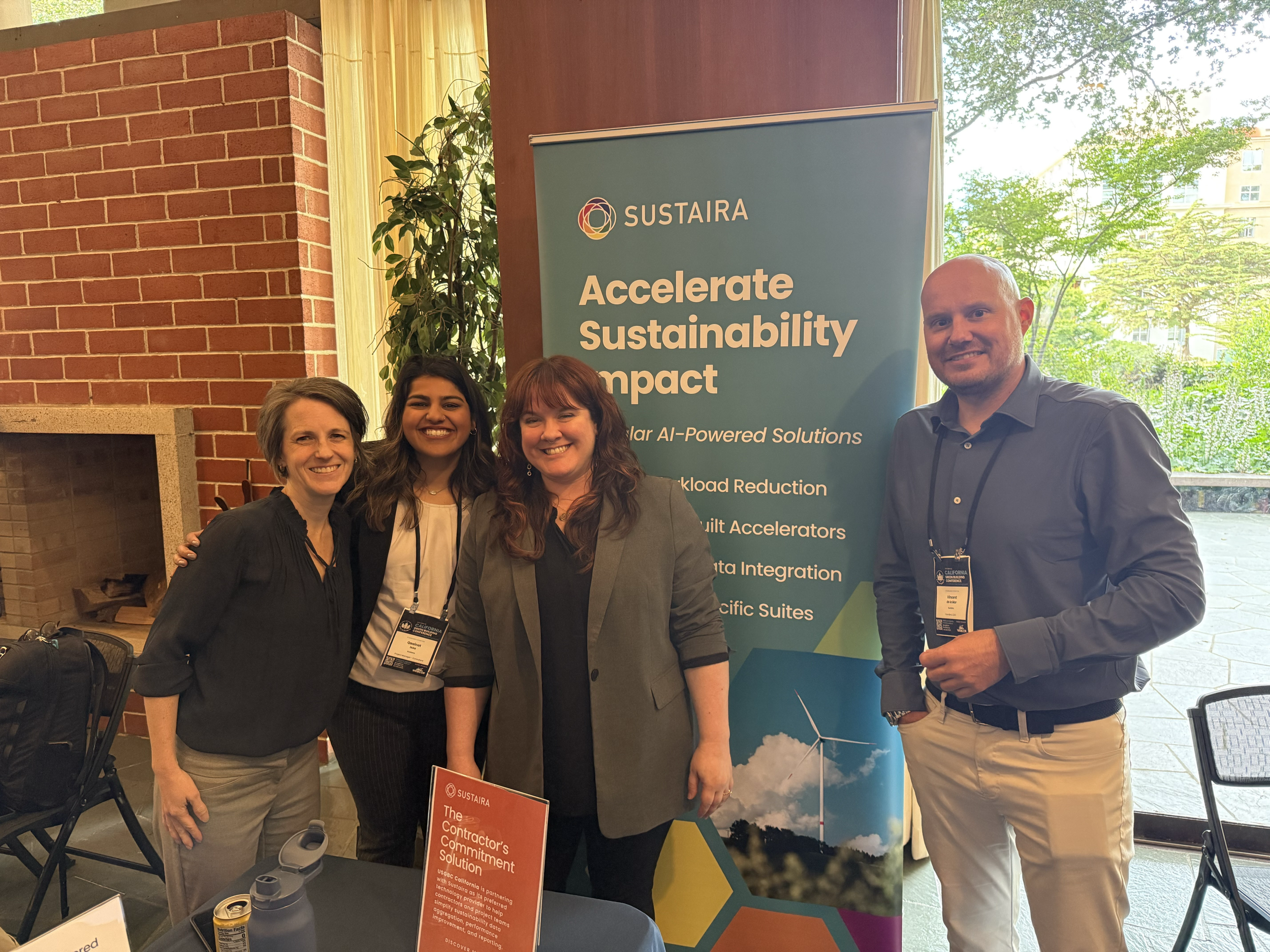
There is real momentum building in the construction industry around more holistic sustainability. The Sustaira team recently joined the Contractor’s Commitment Round Table and the CA Green Building Conference, where we met with sustainability leaders, clients, and partners working at the forefront of this shift.
While carbon accounting and Scope 3 emissions remain central priorities, a clear message emerged: the focus is expanding. Water and waste are quickly becoming the next critical areas of environmental performance.
The challenge of fragmented job-site data
A recurring issue across discussions was the difficulty of consolidating sustainability data across complex project ecosystems. Information is often spread across subcontractor spreadsheets, vendor PDFs, and legacy ERP systems.
For general contractors, this creates a heavy administrative burden when trying to benchmark performance or meet frameworks like the Contractor’s Commitment. Instead of focusing on reduction strategies, teams spend significant time manually compiling data.
This challenge is amplified by lean sustainability teams, often just one or two people responsible for multi-site compliance and reporting demands.
Water and waste as the next frontier
Two priorities stood out consistently:
Waste management is evolving beyond diversion rates
Industry leaders emphasized the need to move toward more granular tracking of materials, embedded waste metrics, and circular design approaches that reduce waste before it reaches the job site.
Water is becoming a real operational constraint
Across regions in Europe and North America, water availability and permitting requirements are increasing pressure on project execution. This is driving demand for better visibility into real-time water usage across sites.
How Sustaira supports this shift
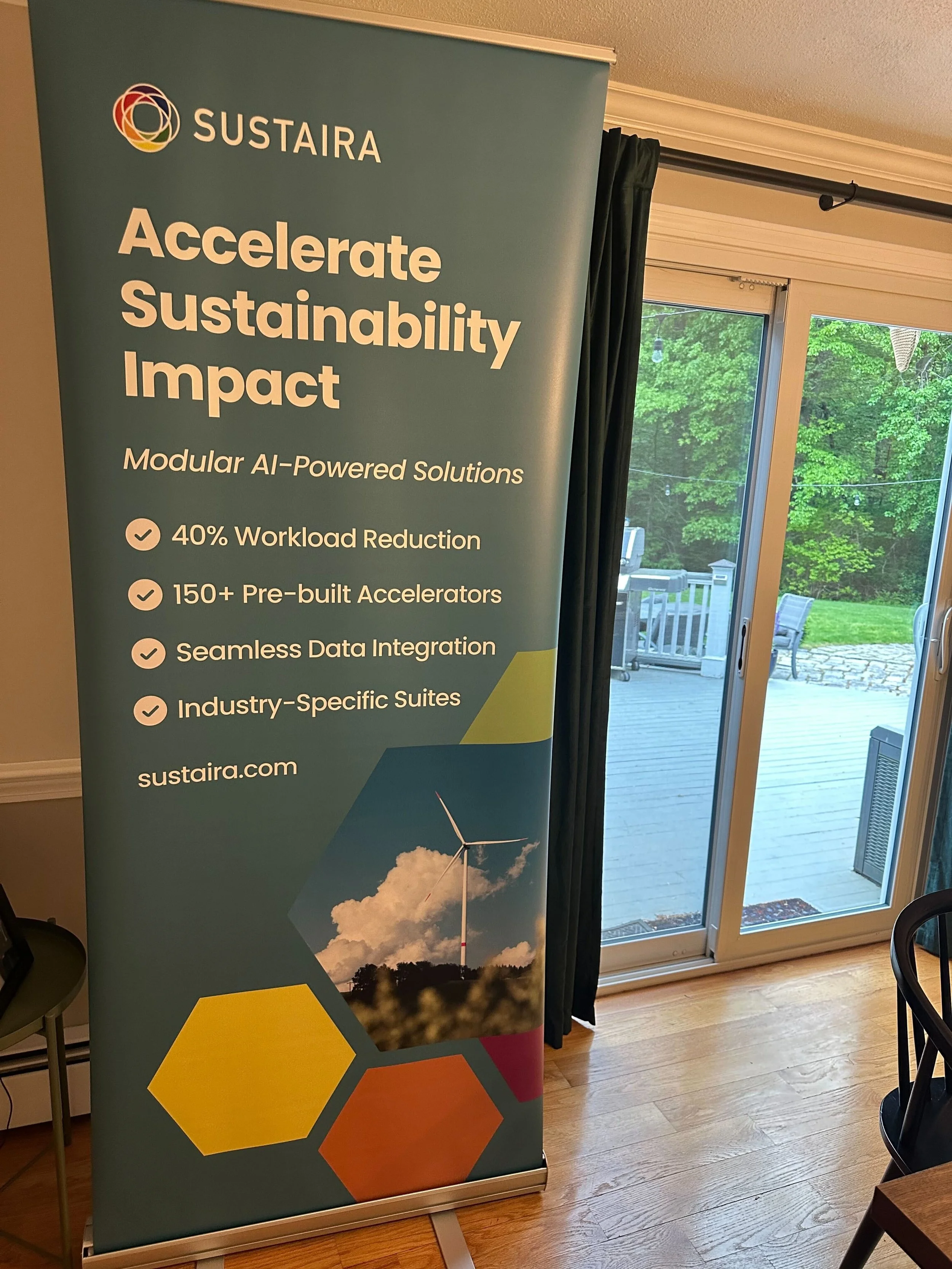
These conversations reinforced Sustaira’s modular approach. Rather than replacing existing systems, we provide a flexible data layer that integrates with current tools and unifies sustainability data across projects.
With construction-specific accelerators for frameworks like the Contractor’s Commitment, waste tracking, and site-level reporting, we help teams automate data collection and reduce manual effort.
This enables sustainability teams to move from reporting-heavy workflows to more proactive, data-driven decision-making.
Closing reflection
The industry is clearly moving beyond carbon alone. The ambition is there, and the next step is turning fragmented data into actionable insight at scale.
We are grateful for the open exchange of ideas last week and will bring these insights directly into our product roadmap as we continue building tools for real-world construction challenges.
