
Building the Future: Low-Carbon Construction Trends in 2026 and Beyond
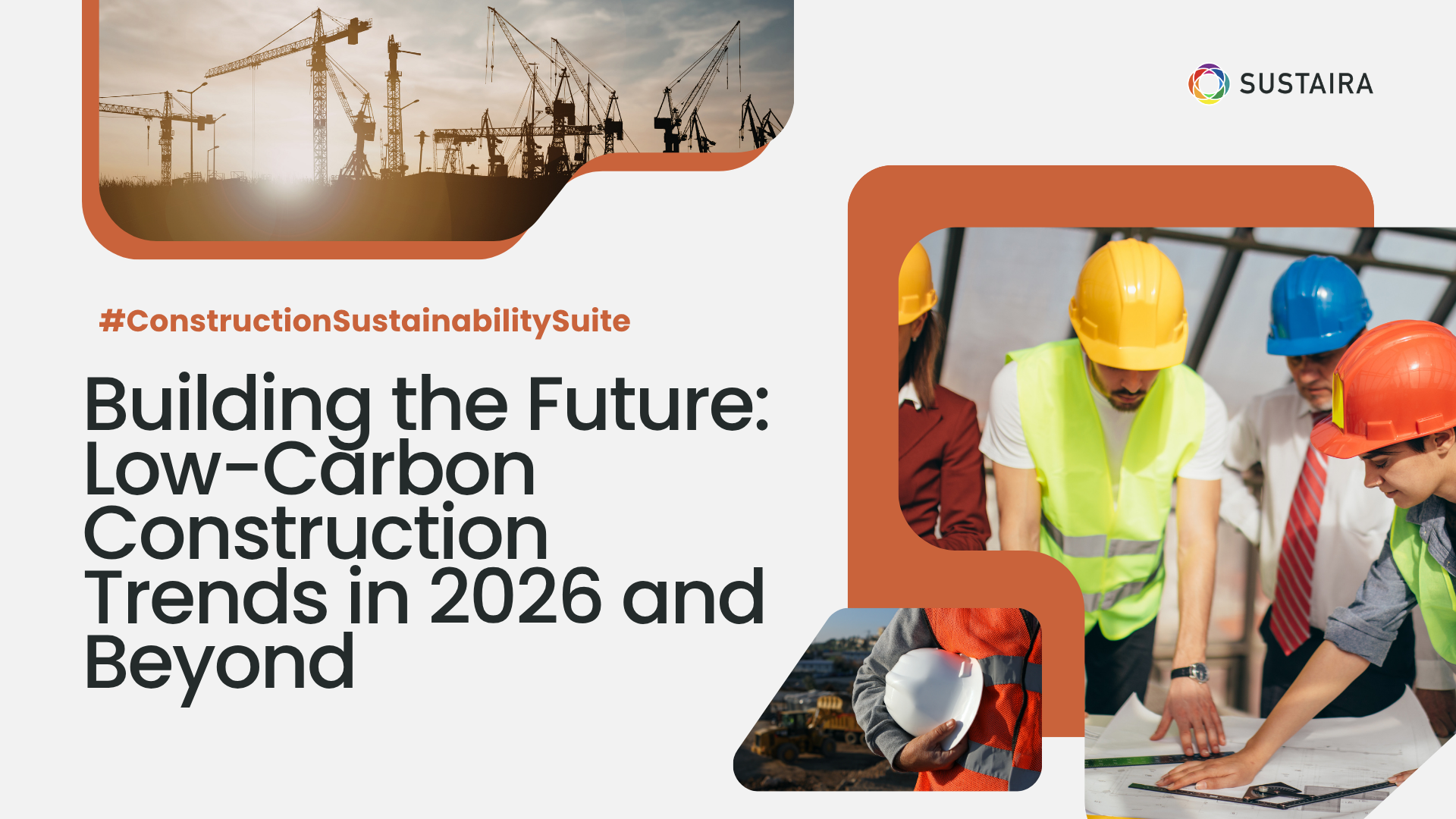
The sustainability landscape in the construction industry has undergone a fundamental shift. A few years ago, climate transition planning was largely a matter of voluntary ambition. It was a way for visionary firms to signal intent and demonstrate leadership. Today, it is a business necessity driven by strict regulatory enforcement and intense financial pressure.
For construction leaders, the mission is clear: transition from high-level strategy on paper to measurable execution on the job site. At Sustaira, we refer to the disconnect between these two points as the "hidden gap." This is the space where fragmented data and rigid legacy systems prevent ambitious sustainability goals from becoming operational realities.
As we navigate 2026, here are the core trends and actionable strategies for a low carbon future in construction.
1. Real Time Predictive Modeling
The construction industry faces unique challenges due to project level fragmentation. ESG data is frequently scattered across various subcontractors and job sites. This fragmentation makes it difficult to compare performance between projects as they happen.
In 2026, retrospective reporting is the bare minimum. Leading firms are now using Scenario Analysis to understand the impact of decisions in real time.
What is the immediate impact of switching to a low carbon concrete supplier mid project?
How are shifting carbon prices affecting the current profitability of our multi year contracts?
By modeling these variables, firms transform uncertain decisions into data driven strategies that protect both margins and the environment.
2. Embodied Carbon and Supply Chain Intelligence
Most construction emissions sit outside direct control in Scope 3. High impact materials like steel and concrete continue to drive the majority of embodied carbon footprints.
The defining trend of 2026 is the maturity of Supply Chain Resilience. Manual data collection is no longer a viable option for organizations of scale. Industry leaders have adopted modular systems that allow for the secure and direct intake of data from thousands of suppliers. This enables firms to:
Benchmark Material Hotspots: Identifying which specific categories, such as wood, metals, or plastics, are driving the most impact.
Bridge the Innovation Gap: Acknowledging that we don’t have all the answers yet. Transparency allows firms to be honest about the "gray boxes" in their plans, areas where future innovation is required to hit 2030 targets.
Maintain Digital Audit Trails: Providing the granular proof required by green financiers.
3. Eliminating the "Reporting Tax" with AI
Sustainability teams in construction remain lean. However, they are managing a growing mountain of compliance demands, such as CSRD, LEED, SBTi or Contractor’s Commitment in North America.
Relying on manual spreadsheets increases risk and wastes valuable time. Modular AI solutions are the primary tool for solving this operational friction. By using Sustaira AI Solutions, firms can now automate the majority of their reporting workflows. This allows project managers to spend less time on administration and more time on actual decarbonization.
4. Organizational Maturity and Scaled Accountability
A credible climate transition plan is a living process rather than a static document. To succeed through 2026 and into 2027, organizations are focusing on three internal priorities:
Granular Data Inventories: Effective management requires precise measurement. Firms are moving beyond simple spend based analysis to Life Cycle Assessment level data for their core materials.
Cascaded Ownership: Sustainability cannot remain the responsibility of a single siloed team. It must be embedded into the KPIs of R&D, procurement, and site engineers.
Skill Nurturing: Developing internal talent is the most significant win for embedding sustainability. This involves training procurement teams to negotiate based on carbon impact and helping R&D teams apply eco design principles to every new project.
Navigating the Future of Construction
As we move through the second half of 2026, the construction organizations that thrive will be those that view sustainability as a core operational discipline rather than a reporting exercise. The risk of inaction has moved beyond reputation. It is now a matter of protecting margins against carbon pricing and ensuring long term access to capital.
Closing the hidden gap between strategy and execution requires a fundamental shift in how we handle data and engage our value chains. By moving toward real time predictive insights and granular supply chain transparency, construction leaders can secure their place in a low carbon economy and build the credibility required to lead in this new era.
Discover how Sustaira can help you unify your data and accelerate your construction sustainability goals by exploring our modular solution suite here.
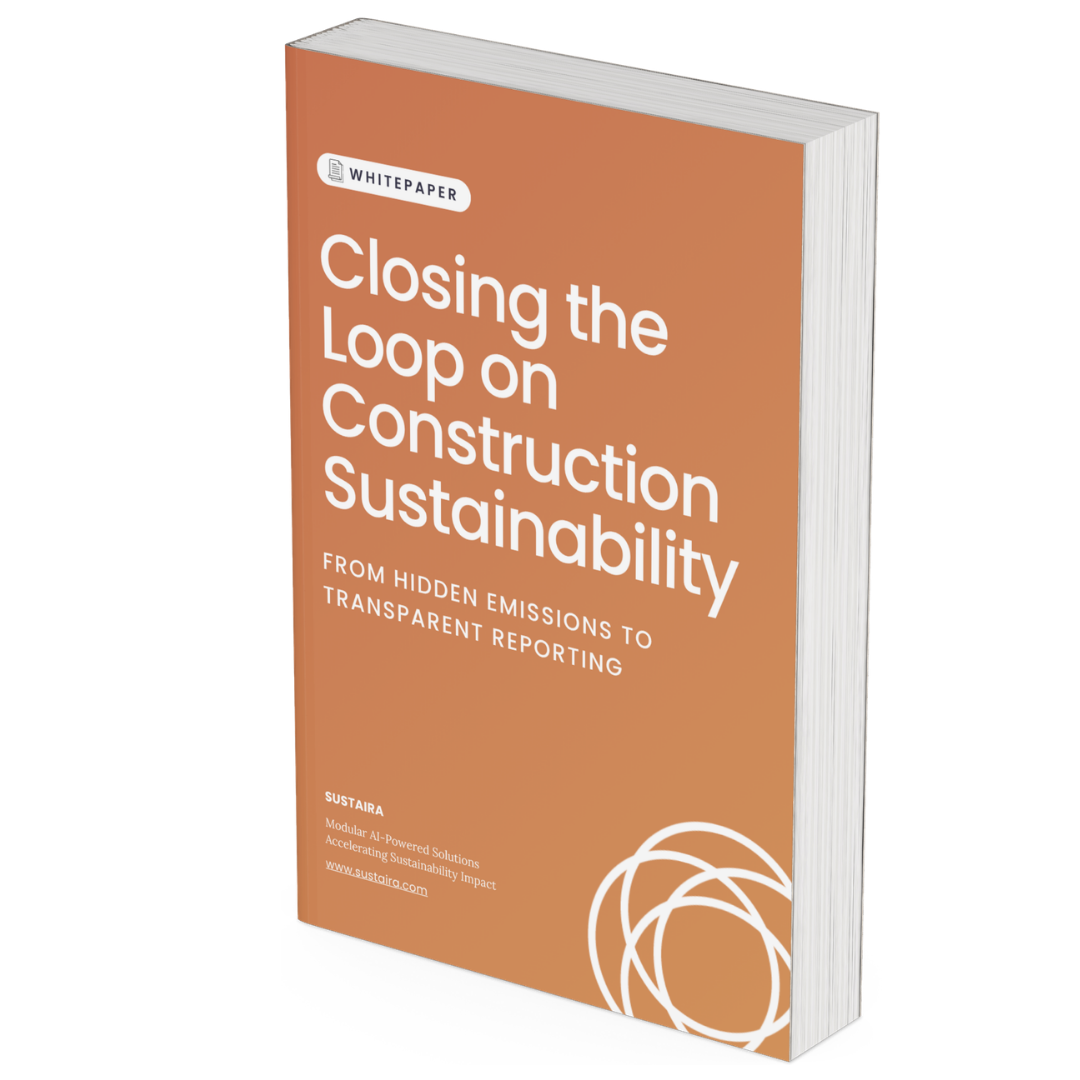
Download the Guide
This whitepaper provides a practical roadmap for construction leaders looking to move from fragmented sustainability reporting to true operational intelligence. It explains why traditional, manual approaches to emissions tracking are no longer sufficient, and highlights key challenges such as hidden Scope 3 emissions, lack of project-level visibility, and increasing regulatory pressure.
Deep Dive into Climate Transition Planning
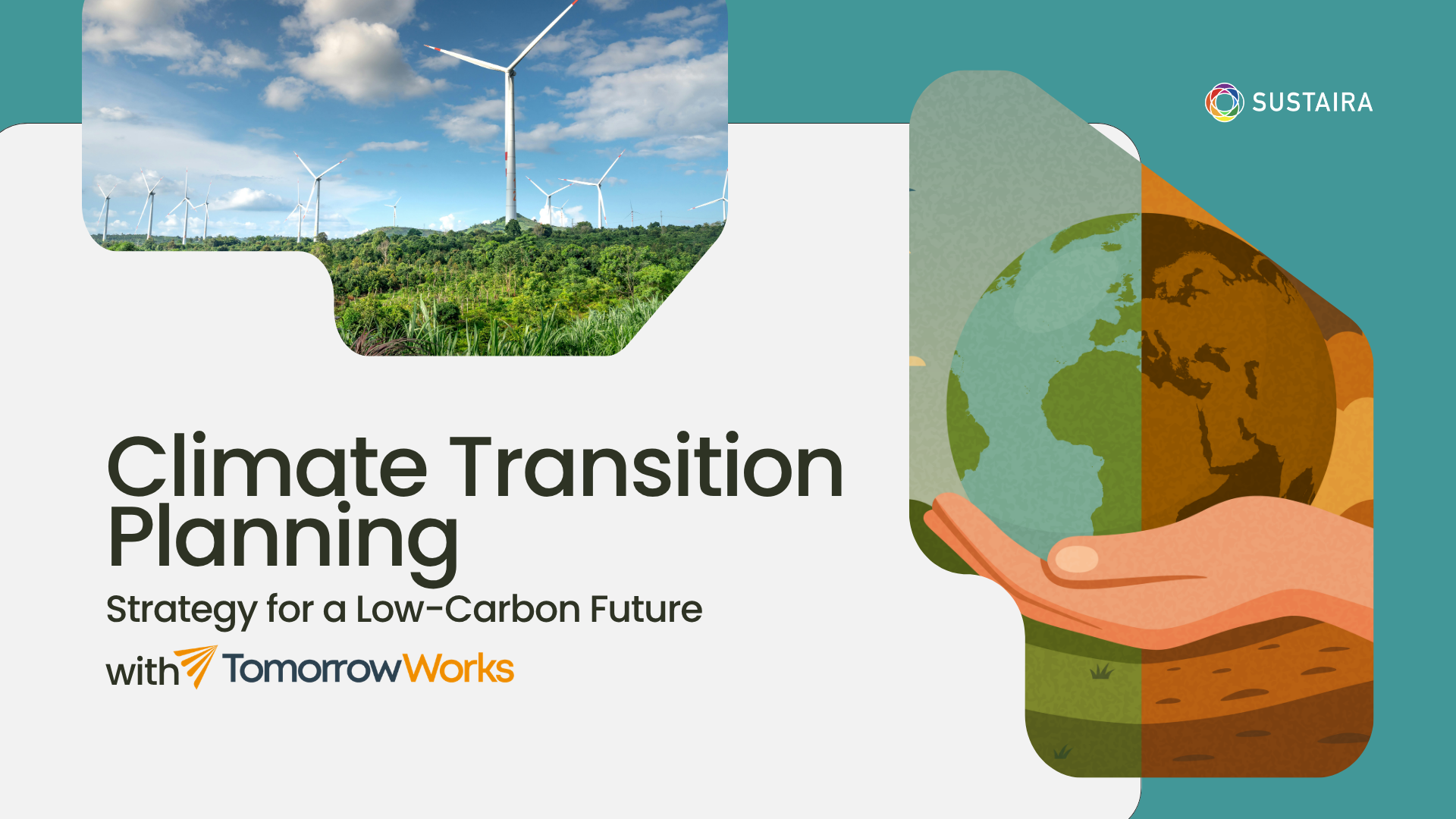
For a more detailed look at the strategies discussed in this article, you can watch our full webinar: "Climate Transition Planning: Strategy for a Low-Carbon Future." In this session,we discuss the seven reasons transition plans often fail and provide a step-by-step roadmap for moving from voluntary ambition to regulated execution.
