
Introducing the 2026 Sustainability Software Evaluation Guide: Choosing Tools That Actually Deliver Impact
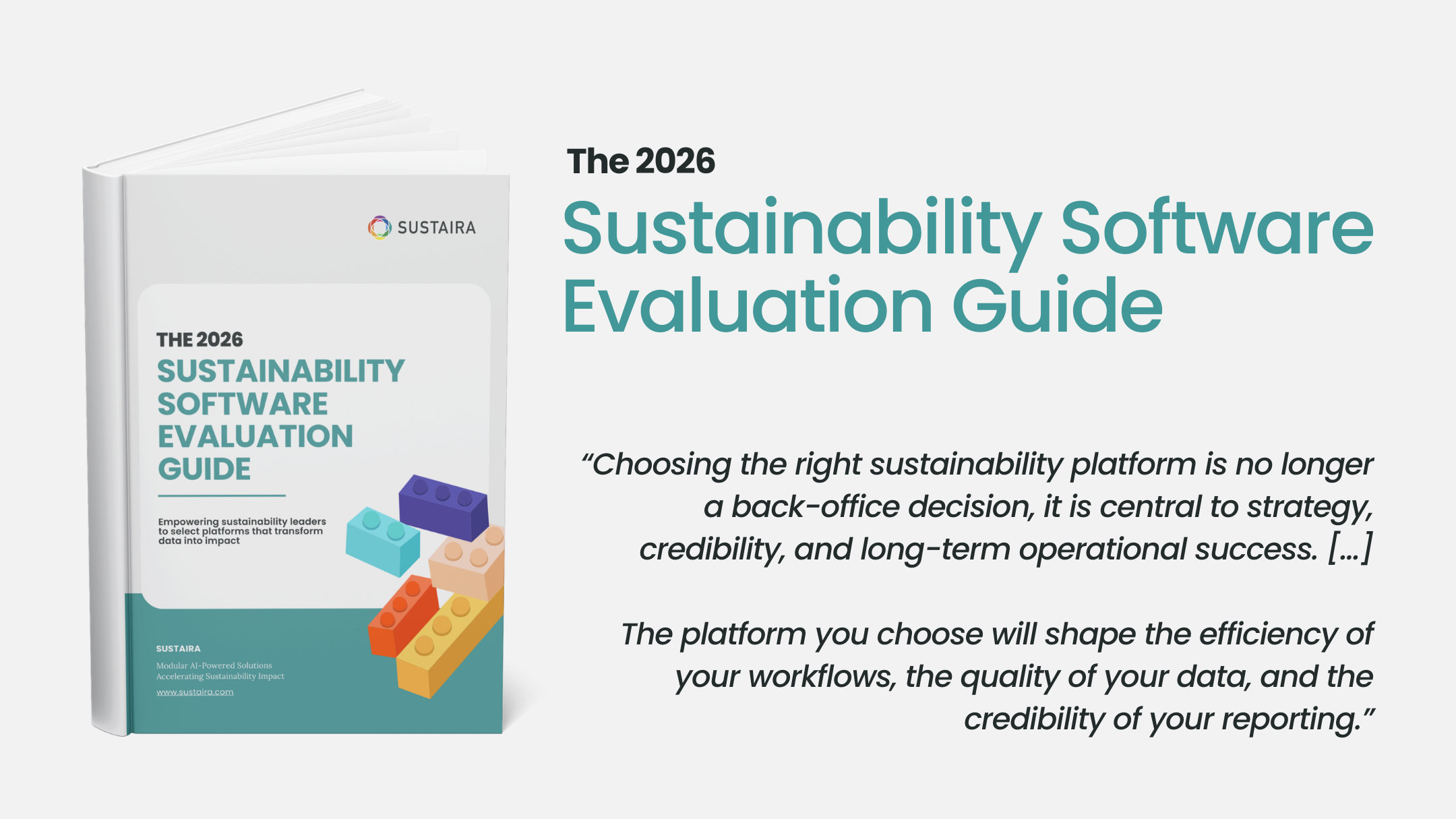
Sustainability is no longer a peripheral function, it is core to business strategy, brand reputation, investor confidence, and regulatory compliance. Yet for many sustainability leaders, the day-to-day reality is far from simple. They must manage complex portfolios of initiatives, track progress across diverse business units, and report to multiple stakeholders, all while navigating evolving regulations, internal expectations, and market pressures.
This is where the challenge begins: the Sustainability software landscape is crowded, and the stakes are high. Many organizations adopt tools too quickly or without a clear framework for evaluation, resulting in fragmented data, siloed teams, and a growing disconnect between strategy and execution. In other words, the wrong platform doesn’t just slow progress, it can actively undermine the organization’s sustainability objectives, creating frustration, lost credibility, and missed opportunities to make meaningful impact.
The Pain Points Sustainability Leaders Face
Data chaos: Sustainability data is scattered across internal systems, spreadsheets, and supplier portals. Without a unified platform, teams spend more time chasing numbers than driving outcomes.
Operational friction: Programs fail to scale when workflows are disconnected or one-size-fits-all solutions don’t reflect the realities of a business’s industry, geography, or operational model.
Compliance pressure: Regulatory frameworks such as ESRS, CSRD, or sector-specific reporting obligations demand audit-ready data and transparent reporting, yet many tools cannot reliably deliver this without heavy manual intervention.
Stakeholder scrutiny: Investors, customers, and boards expect real, measurable sustainability results, not vague claims. Ineffective tools make it difficult to demonstrate value and build trust.
Change management challenges: New platforms require adoption across teams and units. Without strong enablement and support, even the most technically capable solution fails to translate into meaningful impact.
Why the Choice Matters Now
Sustainability leaders face this decision at a critical moment: Sustainability expectations are accelerating, and the next few years will determine whether organizations can integrate sustainability into everyday operations or remain reactive and fragmented. The platform you choose will shape the efficiency of your workflows, the quality of your data, and the credibility of your reporting. It will either enable strategic foresight and operational alignment, or it will reinforce silos and inefficiencies.
Beyond “One-Size-Fits-All”
No two organizations are the same. What works for a multi-brand consumer goods company may fail in a global industrial enterprise. Tools must be flexible, configurable, and sector-aware, allowing sustainability leaders to manage diverse programs, integrate internal and external data, and align initiatives across subsidiaries, regions, and departments. A platform that supports these requirements allows sustainability to operate as a strategic, enterprise-wide capability, rather than a fragmented reporting function.
How the 2026 Sustainability Software Evaluation Guide Helps
This guide is designed to provide clarity in a complex market. It organizes evaluation into functional, technical, and organizational dimensions, offering:
Insights into capabilities that matter, from sustainability data governance and reporting to program management, AI support, and cross-entity collaboration.
Guiding questions for sustainability leaders to help assess whether a platform can handle real-world complexity, scale with your organization, and support evolving sustainability goals.
Contextual understanding, so you can avoid common pitfalls, ensure adoption, and select tools that deliver measurable impact, transparency, and futureproof scalability.
Choosing the right sustainability platform is no longer a back-office decision, it is central to strategy, credibility, and long-term operational success. By evaluating functional, technical, and organizational capabilities together, sustainability leaders can ensure they invest in a tool that not only supports compliance, but drives tangible business outcomes, stakeholder confidence, and meaningful progress toward a sustainable future.
