
How AI And Modular Solutions Are Transforming Packaging Innovation
For the modern Packaging Innovation Manager, the "Golden Age" of design, where form simply followed function and cost was the only North Star, has been replaced by an era of radical transparency.
You are no longer just a designer or a procurement partner; you are a Circular Economy Architect.
The pressure is mounting from every angle: investors demand ESG performance, consumers reject non-recyclable materials, and the regulatory landscape, from the EU’s PPWR to North American EPR schemes, is shifting from voluntary disclosure to direct financial impact.
The bottleneck isn't a lack of innovative materials. It is the inability to validate and scale those decisions within a fragmented data ecosystem.
To move from reactive “firefighting” to proactive leadership, organizations need a more structured, connected approach to packaging data, initiatives, and decision-making.
The "Data Gravity" Problem: Why Innovation Stalls
In many CPG and manufacturing organizations, packaging data suffers from data gravity. It sits in disconnected systems, supplier files, and internal spreadsheets, making it difficult to access, validate, and use.
When you want to innovate, for example by shifting from a multi-layer laminate to a mono-material alternative, you quickly run into constraints:
Supplier data is incomplete or inconsistent
Impact assumptions rely on averages rather than primary inputs
Cost implications are difficult to quantify upfront
End-of-life outcomes vary by region and are hard to verify
As a result, what should be a strategic decision becomes a slow, manual process. By the time insights are available, the opportunity to act has often passed.
Breaking the Silos: Turning Packaging Data into Decisions and Action
Sustaira’s modular approach focuses on solving this fragmentation, not by replacing existing systems, but by connecting data, teams, and decisions.
1. Supplier Engagement & Data Collection at Scale
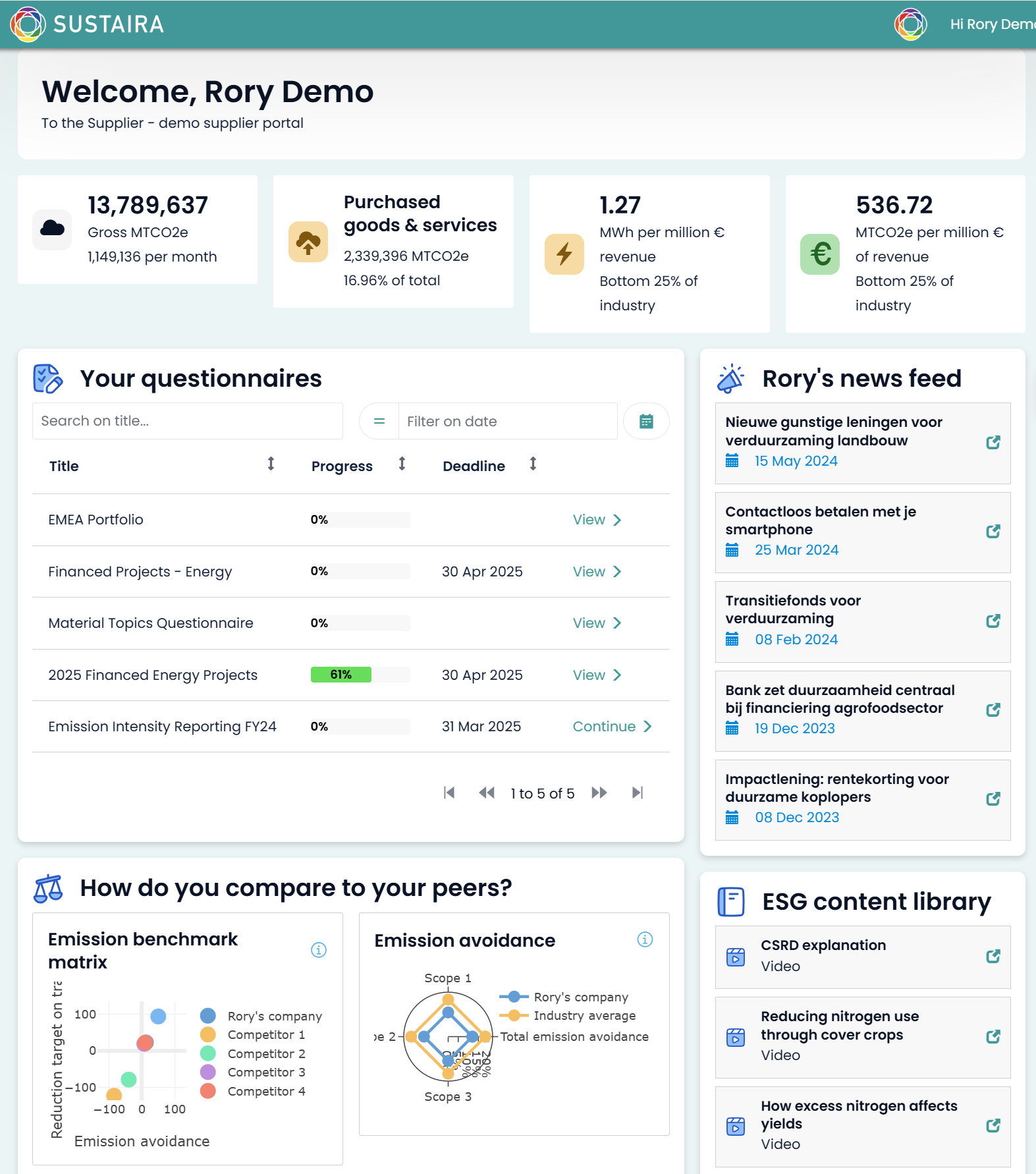
A major bottleneck for packaging teams is collecting reliable, standardized data from suppliers.
Sustaira enables structured supplier engagement through centralized workflows and dedicated supplier portals. Suppliers can submit key packaging data, such as material composition, recycled content, and certifications, in a consistent format.
At the same time, benchmarking dashboards provide suppliers with visibility into their performance compared to peers. This creates a continuous improvement loop, where both data quality and material performance increase over time.
The result is a shift from manual data chasing to a scalable, structured process.
2. Structuring Packaging Initiatives into Actionable Programs
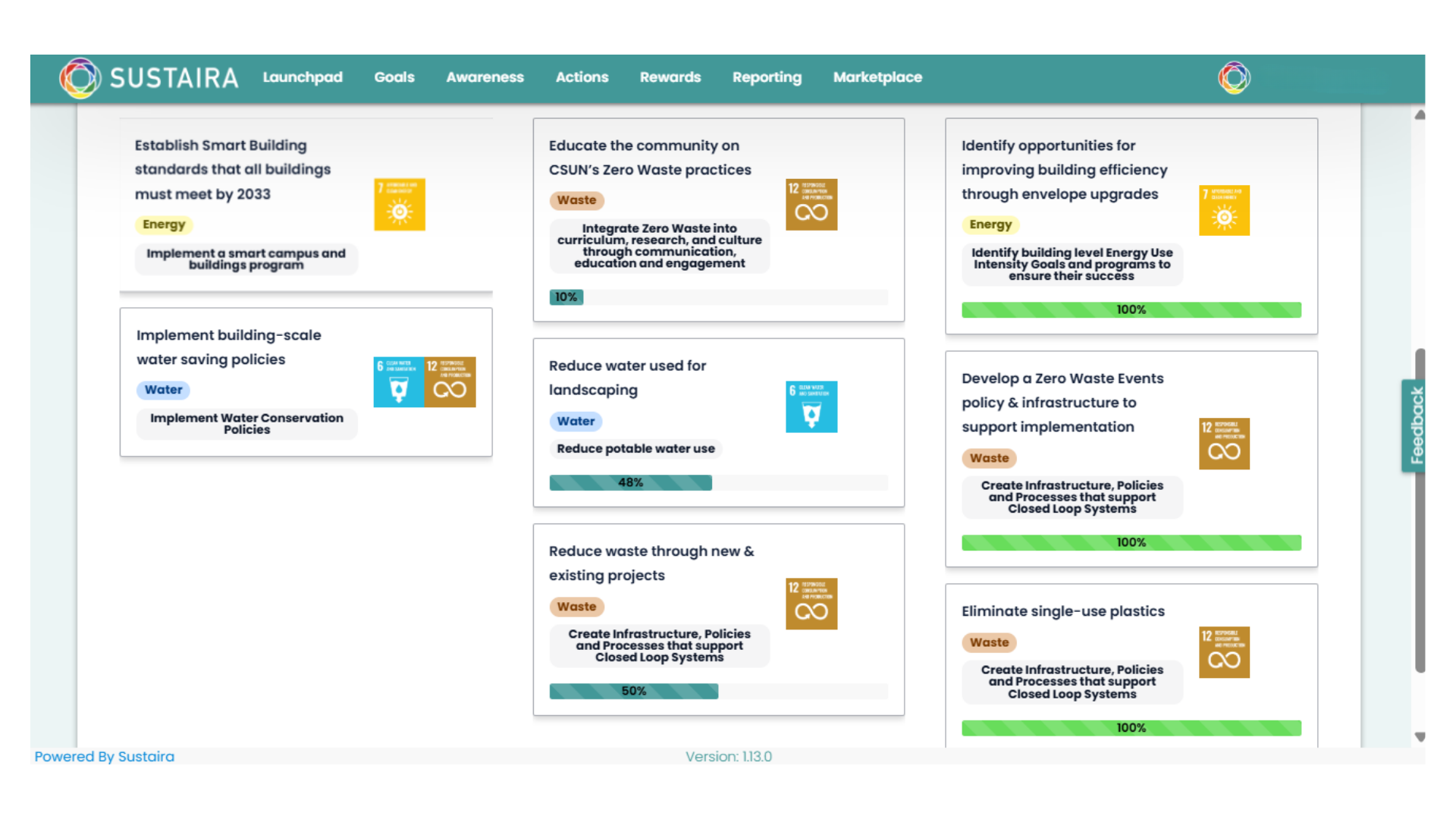
Most organizations already have a pipeline of packaging initiatives: light weighting, material substitution, increased recycled content.
The challenge is not defining them, but managing and prioritizing them.
Sustaira provides a centralized environment to capture packaging initiatives, assign ownership, define KPIs, and track progress. This creates alignment across procurement, R&D, and sustainability teams.
Instead of fragmented trackers and one-off analyses, packaging teams gain a clear view of what is being implemented and how it contributes to overall targets.
3. Connecting Decisions to Impact with Scenario Analysis
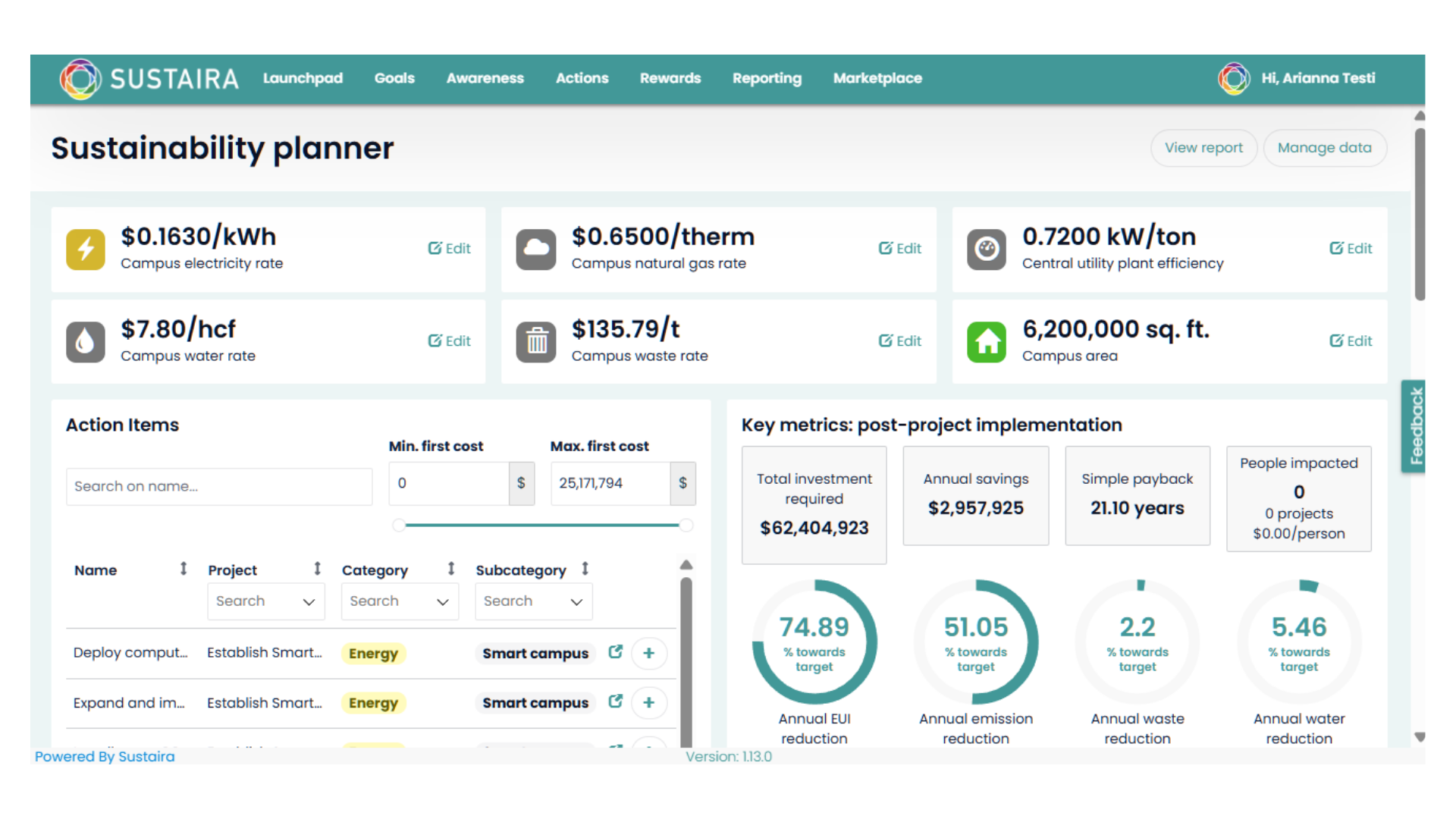
Packaging decisions involve trade-offs between environmental impact, cost, and operational feasibility.
By linking packaging initiatives to scenario analysis capabilities, Sustaira enables teams to evaluate these trade-offs before implementation.
This includes:
Estimated emissions reduction
Implementation costs
Potential savings (e.g. material reduction, avoided EPR fees)
This allows teams to prioritize initiatives based on both impact and feasibility, turning sustainability into a structured decision-making process rather than a reactive exercise.
Shifting the Narrative: Packaging as a Value Center
One of the biggest barriers to progress is internal: positioning sustainable packaging as a cost rather than a driver of value.
What packaging teams need is not just ambition, but credible, decision-ready data.
With a more structured approach to data and initiatives, organizations can:
Reduce regulatory exposure by identifying packaging formats that carry financial risk under evolving regulations
Improve operational efficiency by prioritizing initiatives that deliver both environmental and cost benefits
Strengthen brand credibility by supporting claims with consistent, auditable data
This changes the conversation at the executive level. Packaging is no longer just a compliance topic, it becomes a lever for performance, risk management, and differentiation.
The Path Forward: Start, Structure, Scale
Transforming packaging does not require a full system overhaul. It requires focus and structure.
Sustaira’s approach is built on three practical steps:
Start (Targeted Impact) Focus on a high-volume product category or packaging format. Begin by centralizing supplier data and defining key improvement initiatives.
Structure (Connect Data and Teams) Establish a consistent packaging data model and align teams around shared KPIs and project tracking.
Scale (Expand What Works) Extend the approach across categories, using scenario analysis to continuously prioritize the most impactful initiatives.
The transition to sustainable packaging is not just a design challenge, it is a data and execution challenge.
Organizations that succeed will not necessarily have better ideas. They will have better systems to validate, prioritize, and scale those ideas.
Sustaira’s modular approach helps packaging teams move away from fragmented workflows and toward a more structured, decision-driven model.
This is how packaging evolves from a reporting burden into a measurable driver of business value.
Ready to bring structure to your packaging initiatives?
Request a demo of Sustaira’s Packaging & Circularity capabilities
